
Language: Deutsch · English
 Event - Delete (final)
Event rule „Delete (final)“: interface, context and an example – how to react to this Nuclos event.
REFERENZ DEVELOPER UPDATED: JUL 2026 APPLIES TO NUCLOS 4.2026.X
On this page
When does the rule fire?
This server-side rule runs after a record has been deleted successfully. It can be assigned to a business object.
Structure
Skeleton of the rule class (the rule editor creates it automatically):
package org.nuclet.lager;

import org.nuclos.api.rule.DeleteFinalRule;
import org.nuclos.api.context.DeleteContext;
import org.nuclos.api.annotation.Rule;
import org.nuclos.api.exception.BusinessException;

/** @name
  * @description
  * @usage
  * @change
*/
@Rule(name="Loeschen Lagerposition im Anschluss", description="Loeschen Lagerposition im Anschluss")
public class LoeschenLagerpositionImAnschluss implements DeleteFinalRule {

  public void deleteFinal(DeleteContext context) throws BusinessException {
    }
}
Context: DeleteContext
The context DeleteContext provides the affected BusinessObject via context.getBusinessObject(...); the RuleContext functions (providers) are also available. A BusinessException aborts the operation.
Assignment
Assign it to the target via drag-and-drop in the server rule manager. Optionally restrict execution to a status or an action; control the order with the arrow buttons.
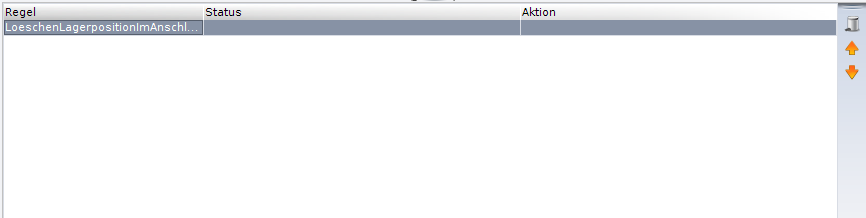
Assignment of „Delete (final)“.
Example
package org.nuclet.company;

import java.util.Date;
import java.util.List;
import org.nuclos.api.annotation.Rule;
import org.nuclos.api.businessobject.BusinessObject;
import org.nuclos.api.businessobject.Query;
import org.nuclos.api.context.DeleteContext;
import org.nuclos.api.exception.BusinessException;
import org.nuclos.api.provider.BusinessObjectProvider;
import org.nuclos.api.provider.QueryProvider;
import org.nuclos.api.rule.DeleteFinalRule;

/** @name
  * @description
  * @usage
  * @change
*/
@Rule(name="BestellungFinalDelete", description="BestellungFinalDelete")
public class BestellungFinalDelete implements DeleteFinalRule {

 public void deleteFinal(DeleteContext context) throws BusinessException {

		Bestellung businessObject = context.getBusinessObject(Bestellung.class);

        Query<History> allHistoryEntries = QueryProvider.create(History.class);
        allHistoryEntries.where(History.EntityId.equals(businessObject.getId()));

        List<History> results = QueryProvider.execute(allHistoryEntries);

        for (History b : results) {
            if (context.isLogical()) {
                b.setBemerkung("logical delete");
            } else {
                b.setBemerkung("physical delete");
            }
            BusinessObjectProvider.update(b);
        }
    }
}
Related pages
Überblick
Inhalte